Advanced Machine Learning Models Explanation for Business Technology, Applications and Benefits
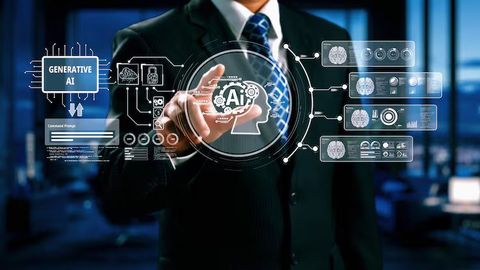
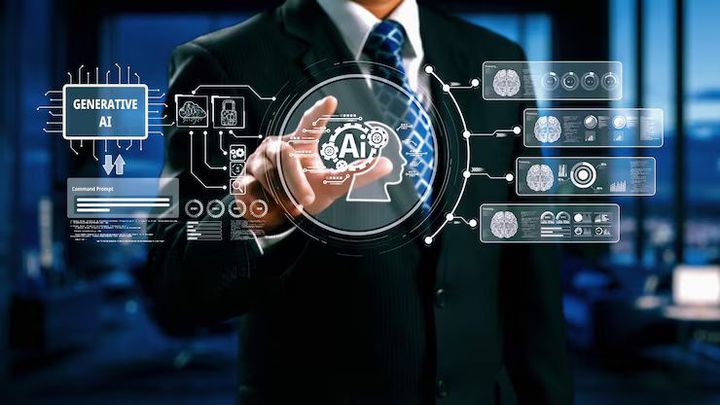
Advanced machine learning models are computational systems designed to analyze data, identify patterns, and make predictions or decisions without being explicitly programmed for every scenario. These models are a core part of modern artificial intelligence and are widely used in business technology to improve efficiency, accuracy, and decision-making.
Machine learning evolved from statistical modeling and computer science research, where early systems focused on simple pattern recognition. As computing power and data availability increased, more sophisticated models were developed to handle complex tasks such as image recognition, natural language processing, and predictive analytics.
Advanced models exist because businesses generate large volumes of data that cannot be processed manually. These models help transform raw data into actionable insights, enabling organizations to optimize operations and understand trends.
Common types of advanced machine learning models include:
-
Deep learning neural networks
-
Gradient boosting models
-
Support vector machines
-
Natural language processing (NLP) models
-
Reinforcement learning systems
These models differ in structure and application, but all aim to learn from data and improve performance over time.
The following table outlines key types of machine learning models and their functions.
| Model Type | Function |
|---|---|
| Neural networks | Process complex patterns in large datasets |
| Decision trees and boosting | Improve prediction accuracy |
| NLP models | Analyze and understand text data |
| Reinforcement learning | Learn through trial-and-error interactions |
Understanding these models provides a foundation for exploring how businesses apply machine learning technologies.
Why Advanced Machine Learning Matters for Business Technology
Machine learning plays a critical role in modern business environments by enabling data-driven decision-making. Organizations use machine learning models to analyze customer behavior, optimize operations, and improve forecasting accuracy.
Businesses across various industries benefit from machine learning technologies:
-
Financial institutions analyzing transaction patterns
-
Retail companies studying customer preferences
-
Healthcare systems supporting diagnosis and treatment planning
-
Manufacturing industries improving process efficiency
-
Technology companies developing intelligent applications
Machine learning helps address several operational challenges:
-
Processing large datasets efficiently
-
Identifying hidden patterns in data
-
Automating repetitive analytical tasks
-
Improving prediction accuracy for business decisions
The following table highlights key benefits of machine learning in business.
| Benefit | Explanation |
|---|---|
| Data-driven insights | Supports informed decision-making |
| Automation | Reduces manual analysis workload |
| Predictive capability | Anticipates trends and outcomes |
| Personalization | Improves customer experience |
| Operational efficiency | Optimizes processes and resources |
Machine learning models also support real-time analytics, allowing businesses to respond quickly to changing conditions.
Another important aspect is scalability. As organizations grow, machine learning systems can handle increasing data volumes without significant changes to infrastructure.
Recent Developments in Machine Learning Technology
Machine learning has experienced rapid advancements during 2024 and 2025, driven by improvements in computational power, data availability, and algorithm design.
One major trend is the development of large-scale foundation models, which are trained on vast datasets and can perform multiple tasks such as text generation, image analysis, and language translation. These models are widely used in business applications involving automation and communication.
Another important development is the increased use of automated machine learning (AutoML) systems. AutoML platforms simplify model development by automating tasks such as feature selection, model tuning, and evaluation.
Key trends influencing machine learning include:
-
Expansion of deep learning architectures
-
Integration of machine learning into cloud platforms
-
Growth of real-time analytics systems
-
Increased focus on explainable AI (XAI)
The following table summarizes recent technological trends.
| Trend | Impact |
|---|---|
| Foundation models | Enables multi-purpose AI applications |
| AutoML systems | Simplifies model development |
| Cloud-based ML platforms | Improves scalability and accessibility |
| Explainable AI | Enhances transparency and trust |
Another emerging area involves edge computing, where machine learning models are deployed on devices such as smartphones and IoT systems, enabling faster processing and reduced latency.
These developments highlight how machine learning continues evolving as a central component of business technology.
Regulations and Policies Affecting Machine Learning
Machine learning technologies are influenced by regulatory frameworks that address data privacy, security, and ethical use.
Governments and international organizations are developing policies to ensure that AI systems operate responsibly and transparently.
Key regulatory areas include:
-
Data protection and privacy laws
-
Ethical guidelines for AI usage
-
Transparency and accountability requirements
-
Risk management for automated decision systems
For example, regulations such as the General Data Protection Regulation (GDPR) in Europe establish rules for handling personal data, which directly affects how machine learning models are trained and deployed.
The following table outlines major policy considerations.
| Regulation Area | Purpose |
|---|---|
| Data privacy laws | Protect personal information |
| AI ethics guidelines | Ensure responsible system design |
| Transparency requirements | Improve explainability of models |
| Risk management policies | Reduce unintended outcomes |
Organizations must consider these regulations when implementing machine learning systems to ensure compliance and maintain user trust.
Tools and Resources for Machine Learning Development
Machine learning development relies on a wide range of tools and platforms that support data processing, model training, and deployment.
Common tools used in machine learning include:
-
Programming languages such as Python and R
-
Machine learning libraries and frameworks
-
Data visualization tools
-
Cloud-based AI platforms
The following table highlights commonly used tools.
| Tool | Function |
|---|---|
| Python libraries (e.g., TensorFlow, PyTorch) | Build and train models |
| Data visualization tools | Analyze and present data insights |
| Cloud ML platforms | Deploy scalable machine learning systems |
| AutoML tools | Automate model development processes |
| Data preprocessing tools | Clean and prepare datasets |
These tools enable engineers and data scientists to develop and manage machine learning systems efficiently.
Educational resources such as online courses, research publications, and technical documentation also support learning and skill development in machine learning.
Frequently Asked Questions About Machine Learning Models
What are advanced machine learning models?
Advanced machine learning models are systems that use algorithms to analyze data, learn patterns, and make predictions or decisions with minimal human intervention.
How are machine learning models used in business?
Businesses use machine learning for tasks such as customer analysis, demand forecasting, fraud detection, and process optimization.
What is the difference between traditional and advanced models?
Advanced models handle more complex data and tasks, often using deep learning or large-scale architectures, while traditional models focus on simpler statistical relationships.
What is explainable AI?
Explainable AI refers to methods that make machine learning models more transparent, allowing users to understand how decisions are made.
What skills are needed for machine learning?
Skills include programming, mathematics, data analysis, and knowledge of machine learning frameworks and tools.
Conclusion
Advanced machine learning models are a key component of modern business technology, enabling organizations to analyze data, automate processes, and improve decision-making. These models have evolved significantly with the development of deep learning, cloud computing, and large-scale data systems.
Recent trends such as foundation models, AutoML, and explainable AI demonstrate how machine learning continues to expand its capabilities across industries. At the same time, regulatory frameworks ensure that these technologies are used responsibly and transparently.
Understanding machine learning models, their applications, and the tools used to develop them provides valuable insight into how businesses leverage artificial intelligence to enhance efficiency and innovation in a data-driven world.