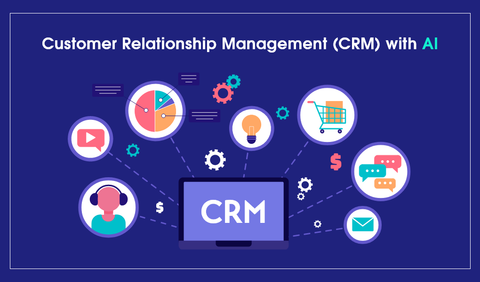
AI in Business Operations Explanation for Systems, Technology and Workflow Optimization
Artificial Intelligence (AI) in business operations refers to the use of advanced algorithms, machine learning models, and data-driven systems to improve how organizations manage daily processes. These technologies are designed to analyze data, automate repetitive tasks, and support decision-making across departments such as finance, logistics, customer support, and production.
The concept of AI in operations exists because traditional business processes often rely on manual work, fixed rules, and limited data analysis. As businesses grow and generate large volumes of data, it becomes difficult to manage workflows efficiently using conventional systems alone.
AI systems help bridge this gap by enabling:
-
Automated data processing and analysis
-
Predictive decision-making using historical data
-
Intelligent workflow management across departments
-
Real-time monitoring of operational performance
Organizations across industries, including manufacturing, retail, healthcare, and finance, are integrating AI technologies to enhance operational efficiency and reduce errors.
Why AI in Business Operations Matters Today
AI in business operations has become increasingly important due to rapid digital transformation and the growing complexity of business environments. Companies now operate in highly competitive markets where speed, accuracy, and adaptability are critical.
Key reasons for its importance
-
Improved efficiency: AI systems can process large datasets quickly, reducing time spent on manual tasks
-
Better decision-making: Predictive analytics helps organizations forecast demand, risks, and trends
-
Scalability: AI-driven workflows can adapt to increased workloads without significant changes in infrastructure
-
Error reduction: Automation minimizes human errors in repetitive processes
Who it affects
AI in operations impacts multiple stakeholders:
-
Business owners and executives who rely on strategic insights
-
Operations managers responsible for workflow optimization
-
Employees who interact with automated systems
-
Customers who experience faster and more consistent services
Problems it helps solve
AI addresses several operational challenges:
-
Inefficient resource allocation
-
Delays in decision-making
-
Lack of real-time data insights
-
High operational risks due to manual errors
Recent Trends and Developments in AI Operations
The past year has seen significant advancements in AI technologies for business operations, with increased adoption across industries.
Notable updates from 2025–2026
-
January 2025: Growth in generative AI tools integrated into enterprise systems for workflow automation
-
Mid-2025: Increased adoption of AI-powered predictive maintenance in manufacturing sectors
-
Late 2025: Expansion of AI-driven customer support systems using natural language processing
-
Early 2026: Wider use of AI in supply chain optimization, including demand forecasting and inventory planning
Emerging trends
-
Hyperautomation: Combining AI with robotic process automation (RPA) to automate complex workflows
-
AI-driven analytics platforms: Tools that provide real-time insights without manual data analysis
-
Cloud-based AI systems: Scalable solutions that support remote operations and distributed teams
-
Ethical AI practices: Focus on transparency, fairness, and accountability in AI decision-making
Adoption overview table
| Industry | AI Application Example | Key Benefit |
|---|---|---|
| Manufacturing | Predictive maintenance | Reduced downtime |
| Retail | Demand forecasting | Inventory optimization |
| Finance | Fraud detection | Risk management |
| Healthcare | Patient data analysis | Improved diagnostics |
| Logistics | Route optimization | Faster delivery |
Laws and Policies Affecting AI in Business Operations
AI adoption in business operations is influenced by various regulations and government policies, particularly related to data protection, privacy, and ethical use.
Key regulatory areas
-
Data protection laws: Regulations such as India’s Digital Personal Data Protection Act (DPDP Act, 2023) govern how businesses collect, store, and process personal data
-
AI governance frameworks: Governments are developing guidelines to ensure responsible AI usage
-
Industry compliance standards: Sectors like finance and healthcare have strict rules for data handling and automated decision-making
Government initiatives in India
-
Promotion of digital transformation through national programs
-
Support for AI research and innovation in business applications
-
Development of frameworks for ethical AI deployment
Compliance considerations
Organizations implementing AI systems must ensure:
-
Transparency in automated decisions
-
Protection of sensitive data
-
Regular audits of AI models
-
Alignment with local and international regulations
Tools and Resources for AI in Business Operations
Various tools and platforms support the implementation of AI in business workflows. These resources help organizations integrate automation, analytics, and decision-making systems effectively.
Common AI tools and platforms
-
Machine learning platforms for predictive analytics
-
Workflow automation tools for process optimization
-
Data visualization dashboards for real-time insights
-
Natural language processing tools for communication systems
Useful categories of resources
-
Analytics platforms: Provide insights into operational performance
-
Automation tools: Handle repetitive tasks such as data entry and reporting
-
Cloud-based AI systems: Enable scalable and flexible deployment
-
Integration tools: Connect AI systems with existing enterprise software
Example workflow optimization process
| Step | AI Role | Outcome |
|---|---|---|
| Data collection | Automated data aggregation | Accurate datasets |
| Data analysis | Machine learning models | Actionable insights |
| Decision-making | Predictive algorithms | Improved planning |
| Execution | Workflow automation | Faster operations |
| Monitoring | Real-time analytics | Continuous improvement |
Frequently Asked Questions About AI in Business Operations
What is AI in business operations?
AI in business operations refers to the use of artificial intelligence technologies to automate processes, analyze data, and improve decision-making within an organization.
How does AI improve workflow optimization?
AI improves workflows by automating repetitive tasks, analyzing data in real time, and identifying inefficiencies. This helps organizations streamline processes and reduce delays.
Is AI suitable for small and large businesses?
AI can be applied to both small and large businesses. Cloud-based AI tools and scalable systems make it possible for organizations of different sizes to adopt these technologies.
What are the risks of using AI in operations?
Some risks include data privacy concerns, lack of transparency in decision-making, and potential biases in AI models. Proper governance and monitoring can help address these issues.
What skills are needed to implement AI in operations?
Key skills include data analysis, understanding of machine learning concepts, system integration knowledge, and familiarity with business processes.
Conclusion
AI in business operations is transforming how organizations manage workflows, analyze data, and make decisions. By integrating advanced systems and technologies, businesses can improve efficiency, reduce errors, and adapt to changing market conditions.
Recent developments show a growing reliance on AI-driven automation, predictive analytics, and cloud-based solutions. At the same time, regulations and policies are shaping how AI is implemented, ensuring responsible and ethical use.
As businesses continue to evolve, AI will remain a critical component of operational strategy. Understanding its role, tools, and impact helps organizations build more efficient and resilient systems for the future.