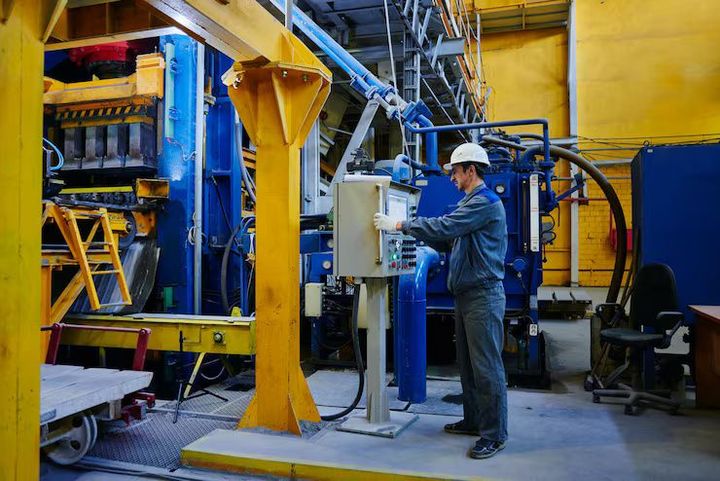
Discover Hydraulic Press Use and Comprehensive Industrial Manufacturing Solutions
A hydraulic press is an industrial machine that uses fluid pressure to generate compressive force for shaping, forming, or assembling materials. It operates based on Pascal’s Law, a principle in physics stating that pressure applied to a confined fluid is transmitted equally in all directions.
Hydraulic presses were developed to provide a more controlled and powerful alternative to mechanical pressing systems. Traditional mechanical presses rely on fixed motion systems, while hydraulic presses allow adjustable force and speed, making them suitable for a wider range of industrial applications.
The core working mechanism involves a hydraulic system with cylinders, pistons, and fluid reservoirs. When force is applied to a small piston, the pressure is transferred through hydraulic fluid to a larger piston, creating a significantly higher output force.
Key components of a hydraulic press include:
-
Hydraulic cylinder and piston system
-
Hydraulic fluid reservoir
-
Pump and motor system
-
Control valves for pressure regulation
-
Frame structure to support pressing operations
This system allows the machine to generate high levels of force with precision control. Hydraulic presses are capable of performing operations such as compression, bending, punching, and forming materials.
The following table explains the basic working principle of hydraulic presses.
| Component | Function |
|---|---|
| Input piston | Applies initial force |
| Hydraulic fluid | Transfers pressure through the system |
| Output piston | Generates amplified force |
| Control valves | Regulate pressure and movement |
| Frame structure | Supports load and maintains alignment |
Hydraulic presses are widely used because they provide consistent force distribution and flexibility across different manufacturing processes.
Why Hydraulic Press Machines Matter in Manufacturing
Hydraulic press machines are essential in modern manufacturing due to their ability to apply controlled force across a wide range of materials. Industries rely on these machines for forming metal parts, assembling components, and shaping materials into precise configurations.
One of the main advantages of hydraulic presses is their ability to generate high force while maintaining control over speed and pressure. This makes them suitable for both heavy-duty industrial tasks and precision operations.
Industries that commonly use hydraulic presses include:
-
Automotive manufacturing
-
Aerospace engineering
-
Metal fabrication and forging
-
Plastic and rubber processing
-
Construction and heavy equipment manufacturing
Hydraulic presses help address several key manufacturing challenges:
-
Achieving uniform material deformation
-
Maintaining dimensional accuracy
-
Reducing material waste
-
Supporting high-volume production
The following table highlights key benefits of hydraulic press systems.
| Manufacturing Benefit | Explanation |
|---|---|
| High force capability | Enables shaping of strong materials |
| Precision control | Allows adjustable pressure and speed |
| Versatility | Supports multiple industrial applications |
| Consistent output | Ensures uniform product quality |
| Energy efficiency | Optimizes power usage compared to some systems |
Hydraulic presses are particularly valuable in applications requiring deep drawing, stamping, or forming operations. These processes require consistent pressure to avoid defects in the final product.
Another important aspect is adaptability. Hydraulic systems can be adjusted to accommodate different materials and production requirements, making them suitable for diverse manufacturing environments.
Recent Developments in Hydraulic Press Technology
The hydraulic press industry has seen several advancements during 2024 and 2025, driven by automation, digital monitoring, and energy efficiency improvements.
One significant trend is the integration of smart control systems. Modern hydraulic presses use programmable logic controllers (PLCs) and digital interfaces to manage pressure, speed, and cycle times. These systems improve precision and allow operators to monitor machine performance in real time.
Another development involves the use of servo-hydraulic systems. These systems combine hydraulic power with electric servo controls, resulting in improved efficiency and reduced energy consumption.
Key technological advancements include:
-
Digital pressure monitoring systems
-
Automated material handling integration
-
Real-time data analytics for machine performance
-
Advanced safety sensors and emergency control systems
The following table summarizes recent innovations in hydraulic press technology.
| Innovation | Impact |
|---|---|
| Servo-hydraulic systems | Enhances precision and energy efficiency |
| Smart control panels | Simplifies machine operation |
| IoT-enabled monitoring | Tracks machine performance in real time |
| Automation integration | Reduces manual intervention |
Another important trend involves predictive maintenance. Sensors monitor factors such as pressure levels, temperature, and vibration, allowing maintenance teams to identify potential issues before they cause machine downtime.
These developments show how hydraulic press systems are evolving alongside modern industrial automation practices.
Regulations and Safety Standards in Hydraulic Press Operations
Hydraulic press machines operate under strict safety and engineering regulations to protect workers and ensure reliable performance.
Industrial safety standards require manufacturers and operators to follow guidelines related to machine operation, maintenance, and workplace safety.
Key regulatory areas include:
-
Machine safety standards for industrial equipment
-
Pressure system safety requirements
-
Occupational health and safety regulations
-
Inspection and maintenance protocols
Organizations such as ISO (International Organization for Standardization) and OSHA (Occupational Safety and Health Administration) provide guidelines for safe operation of industrial machinery.
Common safety practices in hydraulic press operations include:
-
Use of protective guards and barriers
-
Emergency stop mechanisms
-
Regular inspection of hydraulic systems
-
Proper training for machine operators
The following table outlines important safety considerations.
| Safety Area | Purpose |
|---|---|
| Machine guarding | Prevents accidental contact with moving parts |
| Pressure control systems | Avoids excessive force or system failure |
| Emergency stop controls | Allows immediate shutdown in emergencies |
| Maintenance procedures | Ensures safe and reliable operation |
Compliance with these standards helps reduce risks associated with high-pressure systems and ensures safe working environments.
Tools and Resources Used in Hydraulic Press Systems
Hydraulic press operations involve a combination of mechanical components, control systems, and monitoring tools.
Key tools and resources include:
-
Hydraulic control systems for pressure regulation
-
Industrial automation software for machine programming
-
Pressure gauges and sensors
-
Maintenance and diagnostic tools
-
Material handling systems
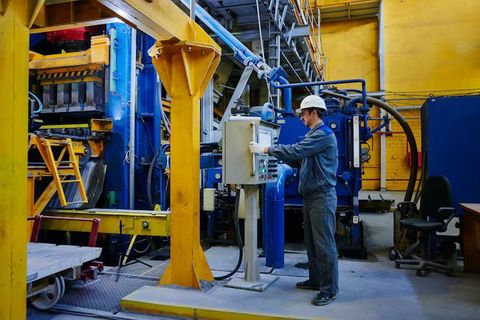
Control systems play a central role in managing press operations. Operators can adjust pressure levels, cycle times, and movement sequences using digital interfaces.
The following table highlights commonly used tools in hydraulic press operations.
| Tool | Function |
|---|---|
| PLC control systems | Automates press operation cycles |
| Pressure sensors | Monitors hydraulic pressure levels |
| Hydraulic pumps | Generates fluid pressure |
| Diagnostic software | Tracks machine performance |
| Maintenance tools | Supports system inspection and repair |
Simulation software is also used in engineering design to test press operations before production begins. These tools help engineers optimize machine settings and improve efficiency.
Educational resources such as engineering manuals, industrial training programs, and technical documentation support operators and engineers in understanding hydraulic systems.
Frequently Asked Questions About Hydraulic Press Machines
What is a hydraulic press used for?
A hydraulic press is used for shaping, forming, and assembling materials by applying controlled pressure. Common applications include metal forming, stamping, and compression molding.
How does a hydraulic press work?
It works based on fluid pressure transfer. Force applied to a small piston is transmitted through hydraulic fluid to a larger piston, producing amplified force.
What industries use hydraulic presses?
Industries such as automotive, aerospace, manufacturing, and construction use hydraulic presses for material forming and assembly processes.
What are the advantages of hydraulic presses?
Advantages include high force output, precise control, versatility, and consistent production quality.
Are hydraulic presses safe to use?
Hydraulic presses are safe when operated according to safety guidelines, including proper training, use of protective equipment, and regular maintenance.
Conclusion
Hydraulic press machines are fundamental to modern industrial manufacturing, providing powerful and controlled force for shaping materials and assembling components. Their ability to deliver consistent pressure and adapt to various applications makes them essential across multiple industries.
Technological advancements such as smart control systems, servo-hydraulic designs, and real-time monitoring have improved the efficiency and precision of hydraulic press operations. At the same time, safety regulations and engineering standards ensure reliable and secure machine performance.
Understanding hydraulic press technology, operational methods, and industrial applications offers valuable insight into how manufacturing systems achieve productivity, precision, and scalability in today’s industrial environment.