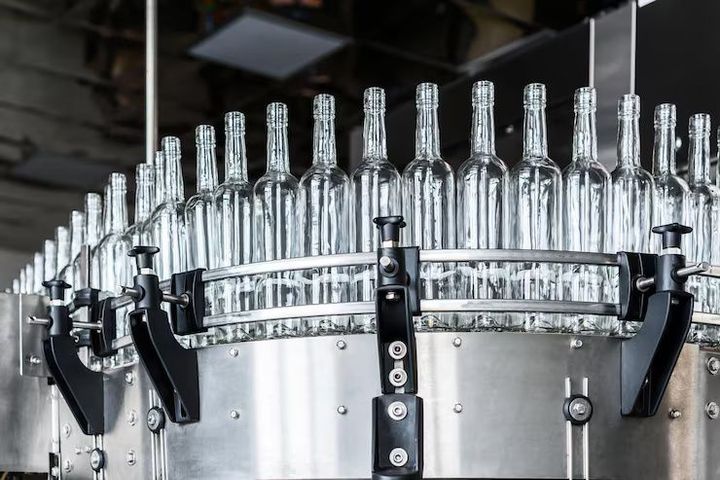
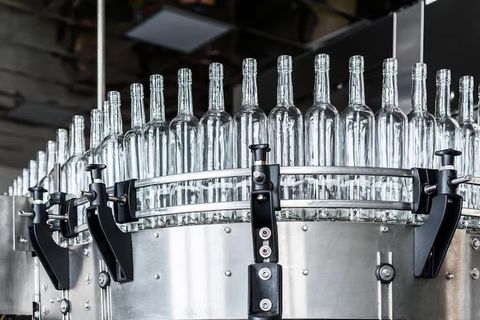
The purpose of industrial filling technology is to ensure consistent volume accuracy, maintain hygiene standards, and improve production efficiency. Manual filling methods may result in inconsistent quantities and slower throughput. Automated bottling systems address these challenges through mechanical and electronic control mechanisms.
There are several filling methods used in bottle filling machines, with gravity filling, piston filling, and vacuum filling being among the most common. Each method is suited to specific product characteristics such as viscosity, foaming tendency, and container type.
As India’s manufacturing and packaged goods sectors continue to expand, modern filling equipment plays a crucial role in maintaining quality standards and operational consistency.
Importance
Bottle filling machines are important because they influence product consistency, packaging quality, and regulatory compliance.
Industries that depend on automated filling systems include:
Key advantages of automated bottle filling machines:
-
Accurate volume control
-
Reduced spillage and product waste
-
Faster production rates
-
Improved hygiene and contamination control
-
Compatibility with automated production lines
Selecting the appropriate filling method depends on product properties. Thin liquids such as water or juice may require different systems compared to thick products like sauces or creams.
The table below compares common filling methods:
| Filling Method | Suitable Liquid Type | Key Advantage |
|---|
| Gravity Filling | Low-viscosity liquids | Simple and cost-efficient operation |
| Piston Filling Machine | Medium to high viscosity | Precise volume control |
| Vacuum Filling System | Thin liquids in rigid bottles | Clean and consistent fill levels |
Understanding these differences supports better capacity planning and equipment selection.
Gravity Filling Method
The gravity filling method uses the natural force of gravity to transfer liquid from a storage tank into bottles. The liquid flows through nozzles once the valve opens, filling the container until a preset level is reached.
This method is suitable for:
-
Water
-
Juices
-
Light oils
-
Non-carbonated beverages
Advantages include:
However, gravity filling may not be ideal for thick or highly viscous products, as flow rate depends on fluid consistency.
Performance factors include:
Piston Filling Machine
A piston filling machine operates using a cylinder and piston mechanism. The piston draws a specific volume of liquid into a chamber and then pushes it into the bottle.
This method is suitable for:
Key advantages:
-
High accuracy in volume measurement
-
Suitable for thick or chunky products
-
Adjustable fill volume settings
Piston filling systems are commonly used in industries where precise dosage is required. In pharmaceutical and cosmetic sectors, consistent volume measurement is critical for regulatory compliance.
The table below outlines piston system features:
| Feature | Description |
|---|
| Adjustable Stroke Length | Controls fill volume |
| Positive Displacement | Ensures accurate liquid transfer |
| Anti-Drip Nozzle | Reduces product wastage |
| Hygienic Design | Supports sanitary production standards |
Routine maintenance of seals and cylinders ensures consistent performance.
Vacuum Filling System
A vacuum filling system uses controlled vacuum pressure to draw liquid into bottles. It is particularly useful for rigid containers and liquids that require uniform fill levels.
This method is suitable for:
Advantages include:
Vacuum filling is often used when visual consistency of fill level is important for packaging presentation.
Performance considerations include:
Recent Updates
During 2025 and early 2026, bottle filling machines have seen advancements in automation and monitoring.
Smart Filling Controls
Modern automated bottling systems incorporate programmable logic controllers (PLCs) for precise timing and volume adjustments.
Touchscreen Interfaces
Improved human-machine interfaces (HMI) allow operators to adjust settings and monitor performance easily.
Hygienic Design Enhancements
Food and pharmaceutical sectors increasingly adopt stainless steel construction and automated cleaning systems.
Energy Efficiency
Optimized motor drives reduce energy consumption while maintaining throughput.
The following table summarizes recent developments:
| Innovation Area | Description | Operational Benefit |
|---|
| PLC Automation | Programmable fill control | Higher precision |
| Touchscreen HMI | User-friendly system monitoring | Simplified operation |
| CIP Integration | Automated cleaning cycles | Improved hygiene compliance |
| Energy-Efficient Motors | Optimized drive systems | Reduced operational strain |
These improvements align with broader trends in industrial filling technology.
Laws or Policies
Bottle filling machines in India must comply with industry-specific regulations.
In the food and beverage sector, the Food Safety and Standards Authority of India (FSSAI) mandates hygiene and quality standards.
Pharmaceutical filling equipment must comply with Good Manufacturing Practices (GMP) and guidelines issued by the Central Drugs Standard Control Organization (CDSCO).
The Bureau of Indian Standards (BIS) may apply to electrical and mechanical safety specifications of industrial machinery.
Key compliance areas include:
Environmental and workplace safety standards under the Factories Act, 1948 also apply to manufacturing facilities using filling equipment.
Adherence to food safety regulations India enforces ensures product quality and operational legitimacy.
Tools and Resources
Effective operation of bottle filling machines requires supporting tools and monitoring systems.
Common operational tools:
Digital resources:
-
Production tracking software
-
Preventive maintenance schedules
-
Quality control documentation systems
-
PLC programming interfaces
The table below outlines essential resources:
| Resource Category | Purpose |
|---|
| Flow Measurement Tool | Verify liquid dispensing rate |
| Calibration Equipment | Ensure volume accuracy |
| Maintenance Checklist | Track servicing intervals |
| HMI Dashboard | Monitor system performance |
| Quality Inspection Log | Maintain compliance documentation |
Routine inspection and calibration are essential for maintaining reliable filling accuracy.
FAQs
What is the difference between gravity and piston filling?
Gravity filling relies on natural flow and is best for thin liquids, while piston filling uses positive displacement for precise handling of thicker products.
When is vacuum filling preferred?
Vacuum filling is ideal when uniform fill levels and reduced air inclusion are required, especially in rigid containers.
Are bottle filling machines suitable for high-speed production?
Yes. Automated bottling systems are designed for continuous high-volume operations with controlled accuracy.
Do filling machines require regular calibration?
Yes. Periodic calibration ensures volume accuracy and compliance with quality standards.
Are hygiene standards mandatory in food filling operations?
Yes. Equipment must meet FSSAI and other regulatory hygiene requirements in India.
Conclusion
Bottle filling machines are essential components of modern liquid packaging equipment. Gravity filling, piston filling machines, and vacuum filling systems each serve specific product and production requirements.
Recent advancements in PLC automation, hygienic design, and energy-efficient motors demonstrate the evolution of industrial filling technology. At the same time, compliance with food safety regulations India enforces ensures quality and consumer protection.
By selecting the appropriate filling method and maintaining proper calibration and monitoring systems, manufacturers can achieve consistent performance and reliable packaging outcomes.