A Guide to Real-Time Simulation in Industrial Machinery and Innovative Machinery Technology
Real-time simulation has steadily become one of the most practical and transformative tools in industrial machinery and modern manufacturing.
As production systems grow more complex, the need to understand how machines behave under different conditions—without stopping operations—has become essential. Real-time simulation allows engineers, technicians, operations teams to test behaviors, predict performance.
Benefits and Limitations of Real-Time Simulation
Real-time simulation offers several advantages, but it also has practical limitations. Understanding both helps industries use it more effectively.
Key Benefits
1. Better Testing Without Interrupting Operations
Real-time simulation provides a safe environment to test control logic, machine behavior, and system responses without shutting down equipment. This is particularly useful in environments such as food processing lines using stainless steel conveyors, automated warehouses, or chemical processing.
2. Improved Decision-Making
By presenting machine behavior in real time, teams can evaluate the impact of speed adjustments, load changes, or process alterations before applying them physically.
3. Enhanced Safety
Simulated testing helps avoid hazardous trial-and-error on live machinery and reduces the risks associated with manual intervention.
4. Faster Troubleshooting
Simulation allows operators to identify root causes faster. For example, when integrated with an industrial machine monitoring system, anomalies can be reproduced digitally for deeper analysis.
5. Support for Automation Initiatives
Material flow automation, wireless industrial automation, and predictive maintenance tools benefit from real-time simulation because they rely on accurate digital models.
Limitations
1. Accuracy Depends on Model Quality
A simulation is only as accurate as the data used to build it. Poorly configured models may not reflect real behavior.
2. High Complexity in Large Systems
Complex manufacturing environments require detailed modeling, which can involve significant time and technical expertise.
3. Initial Setup Costs
Although long-term benefits are significant, organizations must still invest time and resources during initial deployment.
4. Requires Skilled Operators
Teams need training to interpret simulation results correctly and apply them responsibly.
Types and Categories of Real-Time Simulation
Real-time simulation can be categorized based on purpose, technology, and integration level. Here are the primary types used in industrial settings.
1. Hardware-in-the-Loop (HIL) Simulation
HIL simulation uses real hardware components connected to a software model. It is often used for machine control systems, robotics, and automation tuning.
2. Software-in-the-Loop (SIL) Simulation
SIL simulation tests control logic purely in software without physical components. This approach is commonly used during early design stages.
3. Digital Twin Simulation
A digital twin is a virtual representation of a physical machine or process that updates continuously based on real-time data. Digital twins are widely used for predictive maintenance, automated temperature monitoring, and production optimization.
4. Process and Production Simulation
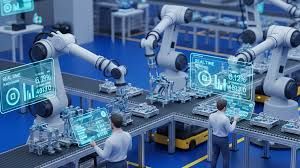
Manufacturing simulation software is used to model entire production lines, including conveyors, robotic systems, and material flow automation.
5. Warehouse and Logistics Simulation
This type models automated storage systems, warehouse carousel storage systems, and shelving layouts to improve space and flow efficiency.
6. Environmental and Condition Simulation
Simulating temperature, pressure, and load variations helps test automated temperature monitoring systems and environmental control mechanisms.
Latest Trends and Innovations in Real-Time Industrial Simulation
Modern manufacturing environments continue to adopt emerging technologies that strengthen simulation capabilities.
Digital Twins Becoming Standard
Many industries now integrate digital twins with industrial machine monitoring systems to simulate everything from wear patterns to maintenance cycles.
Wireless Industrial Automation
Wireless communication systems allow sensors, actuators, and equipment to interact seamlessly with simulation platforms, improving data flow and reducing wiring complexity.
AI-Enabled Predictive Modeling
Artificial intelligence can analyze simulation data to suggest operational improvements or detect unseen patterns.
Integration with Material Flow Automation
Manufacturers use simulations to optimize conveyor speeds, robotic movement, pallet flow, and automated guided vehicles before modifying physical layouts.
Growth of Smart Warehousing
Warehouse simulation systems support planning for:
-
warehouse carousel storage systems
-
automated picking technologies
-
storage density improvements
-
comparisons like "warehouse shelving near me" options that match facility needs
Simulation for Food Processing
Stainless steel conveyors used in food processing are ideal for stress, load, and hygiene-related simulations, ensuring consistent and reliable performance.
Key Features to Consider When Choosing Real-Time Simulation Tools
When selecting real-time simulation software or platforms, users should focus on features that align with practical operations.
1. Real-Time Data Integration
Tools should connect directly to sensors and controllers to reflect live conditions.
2. Hardware Compatibility
Many industrial settings use diverse equipment brands. Compatibility with existing PLCs, drives, and sensors is crucial.
3. Visualization Quality
Clear dashboards, graphs, and 3D models aid in understanding machine behavior.
4. Scalability
Whether simulating a single machine or an entire facility, the system should handle future expansion.
5. Accuracy and Modeling Depth
The software should allow detailed modeling of temperature, flow, vibrations, motion, and structural stress where relevant.
6. Support for Automation Technologies
Compatibility with automated temperature monitoring systems, material flow automation, and warehouse automation tools adds long-term value.
Top Companies and Available Solutions
Below is a neutral list of well-known companies that offer simulation or industrial automation tools. Public sources are included for informational purposes.
| Company | Area of Strength | Public Information |
|---|---|---|
| Siemens | Digital twins, manufacturing simulation, automation systems | siemens.com |
| Rockwell Automation | Industrial automation, control systems, simulation tools | rockwellautomation.com |
| Dassault Systèmes | 3D simulation, modeling, digital manufacturing | 3ds.com |
| ANSYS | Engineering and physics-based simulation | ansys.com |
| MathWorks | Real-time simulation using MATLAB and Simulink | mathworks.com |
| Honeywell | Industrial monitoring systems, automated controls | honeywell.com |
| Emerson | Process control, environmental simulation | emerson.com |
These solutions vary based on industry type, scale, and application depth.
Comparison Table: Real-Time Simulation Categories
| Category | Best For | Key Advantage | Limitation |
|---|---|---|---|
| Hardware-in-the-Loop | Machine control, robotics | High realism | Requires physical components |
| Software-in-the-Loop | Early testing, code validation | Fast testing cycle | Limited physical accuracy |
| Digital Twins | Predictive maintenance, monitoring | Real-time insights | Data-heavy |
| Production Simulation | Full factory planning | Optimizes layout and flow | Complex model setup |
| Warehouse Simulation | Storage and logistics | Improves picking and space use | May require updates as layouts change |
How to Choose the Right Simulation Option
Selecting the right type of real-time simulation depends on several factors.
1. Define the Purpose
Clear goals help identify the correct simulation method. For example:
-
digital twins for monitoring
-
production simulation for layout planning
-
environmental simulation for automated temperature monitoring
2. Evaluate the Scale
Large facilities with diverse machinery may need expandable platforms.
3. Consider Industry Requirements
Food processing, logistics, automotive, and chemical plants all have different simulation needs.
4. Check Integration Capability
Compatibility with PLCs, sensors, and industrial machine monitoring systems is essential.
5. Look for Long-Term Use Cases
Choose tools that support future automation such as wireless industrial automation or warehouse carousel storage systems.
Tips for Best Use or Maintenance
1. Keep Models Updated
Regularly update machine parameters, production schedules, and sensor data.
2. Train Staff
Well-trained operators interpret results more accurately.
3. Use Simulation for Planning Changes
Before adjusting conveyor speeds or storage layouts, test changes in the simulation environment.
4. Integrate Monitoring Data
Combine real-time simulation with industrial machine monitoring systems for deeper insights.
5. Review Performance Regularly
Schedule reviews to compare simulated outcomes with real production results.
Checklist for Selecting Simulation Tools
-
Clear purpose identified
-
Accurate machine and process data available
-
Integration support for automation systems
-
Real-time monitoring compatibility
-
Scalable architecture
-
Good visualization tools
-
Reliable support documentation
-
Budget defined
-
Maintenance planning in place
Frequently Asked Questions
1. Is real-time simulation difficult to implement?
It depends on system complexity, but many modern tools are designed for gradual adoption.
2. Can simulation replace physical testing?
It complements physical testing but does not fully replace it.
3. Does simulation help with warehouse planning?
Yes. Warehouse carousel storage systems, shelving configurations, and picking workflows can be modeled through simulation.
4. Is simulation useful for food processing?
Yes. Stainless steel conveyors, cooking lines, and temperature-sensitive processes can all be modeled.
5. Can automation systems run without simulation?
Yes, but simulation improves planning, reduces risk, and enhances long-term performance.
6. Do small businesses benefit from simulation?
Even small operations can use basic models for layout planning or equipment testing.
Conclusion
Real-time simulation is becoming an essential tool for modern manufacturing and industrial machinery. It supports safer testing, smoother automation adoption, and more efficient system planning. As industries continue to incorporate innovations such as wireless industrial automation, automated temperature monitoring, warehouse carousel storage systems, stainless steel conveyors, and advanced machine monitoring systems, simulation will only grow in importance.
The ability to visualize processes, anticipate outcomes, and refine operations makes simulation a valuable resource for organizations of all sizes. With careful selection, regular updates, and clear operational goals, real-time simulation can help industries achieve more reliable, consistent, and well-planned operations.