Strategies for Accelerating Assay Development in Biomedical Research
In biomedical research, assays serve as the fundamental tools through which scientists measure biological activity, detect biomarkers, and evaluate therapeutic interventions.
The process of creating these assays — known as assay development — is critical for generating reliable, reproducible data that can drive scientific insight and therapeutic progress. As research demands grow more complex, the pressure to develop assays faster, with greater accuracy and broader applicability, also increases. By exploring strategies to accelerate assay development, researchers can better balance speed with quality and ensure their work remains robust and impactful.
Why Assay Development Matters: Relevance & Context
An assay is essentially a test or investigative procedure used to measure the presence, quantity or activity of a biological target (analyte) such as a drug, enzyme, cell, or organism. BMG LABTECH+1 In biomedical research and drug discovery, the development of reliable assays is a foundational step. For example, before a drug enters clinical trials, one needs assays to confirm target engagement, measure potency, and support mechanism of action studies. Danaher Life Sciences+1
When assay development is done well, it improves the speed of discovery, ensures data validity, enables easier translation to clinical settings, and reduces risk of failure in later stages. Conversely, poorly developed assays can lead to irreproducible results, wasted time and resources, and even failure of drug approval due to inadequate analytical validation. BMG LABTECH+1
Given these stakes, the need for effective strategies to accelerate assay development — without compromising quality — is clear.
Benefits and Limitations of Accelerated Assay Development
Benefits
-
Faster entry into downstream experiments: Shorter assay development time means faster progress into screening, validation, and translational phases.
-
Cost savings: Reducing wasted time and iterations lowers overall research expenditure.
-
Competitive advantage: In drug development or academic settings, faster assay readiness can translate into faster publications, patent filings or therapeutic development.
-
Improved responsiveness: Researchers can adapt more quickly to new hypotheses or emerging biomarkers, which is especially helpful in fast-moving fields like immuno-oncology or infectious disease.
Limitations and Risks
-
Compromise on robustness: Accelerating too much may leave less time for optimization and validation, increasing risk of assay artefacts or poor reproducibility.
-
Trade-off between breadth and depth: An assay developed rapidly may cover fewer parameters or less complexity, limiting its versatility.
-
Requirement for expertise and infrastructure: Quick development often relies on established platforms, automation, or outsourcing, which may not be accessible to every lab.
-
Regulatory or translational bottlenecks: Even if development is fast, full validation or regulatory submission may still take considerable time.
Understanding both sides helps in planning a realistic roadmap: acceleration is desirable, but not at the cost of integrity.
Types or Categories of Assays in Biomedical Research
Assays in biomedical research vary by format, complexity, and application. Here are common categories:
| Category | Description |
|---|---|
| Biochemical assays | Measure direct interactions or enzymatic activity in purified systems (e.g., enzyme kinetics, receptor binding). Ichor Life Sciences |
| Cell-based assays | Use live cells to examine complex biology: target engagement, signalling, cytotoxicity, etc. Danaher Life Sciences |
| Immunoassays | Use antibody-based detection (e.g., ELISA, multiplex immunoassays) to quantify proteins or other analytes in samples. labs.iqvia.com+1 |
| High-throughput screening (HTS) assays | Designed for large-scale compound libraries or many samples, often automated with miniaturised formats. Danaher Life Sciences |
| Multiplex or multi-omic assays | Simultaneous measurement of multiple analytes (proteins, nucleic acids, cells) or combined modalities (single cell DNA + protein). Mission Bio |
| Technology transfer and scale-up assays | Assays developed initially for research, then scaled for commercial or clinical use (including kit production or CRO transfer). Immunitas Bio |
When accelerating development, knowing which type you’re dealing with is critical since the complexity and validation requirements differ markedly.
Latest Trends or Innovations in Assay Development
Several innovations are helping accelerate assay development:
-
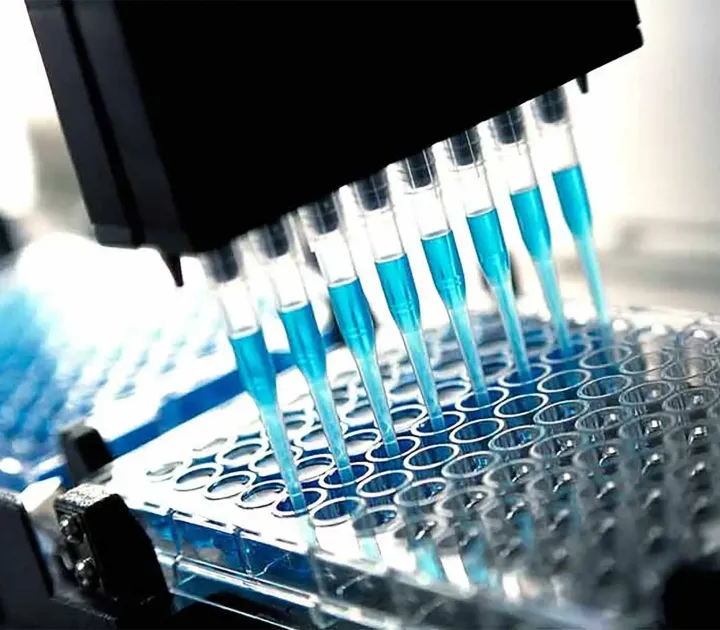
Automated and miniaturised platforms: For example, microfluidic devices and miniaturised ELISA systems reduce reagent consumption and cycle time. arXiv
-
Mass-transport and microfluidic optimisation: Enhanced kinetics via microfluidics can reduce assay time and increase sensitivity. arXiv+1
-
Single-cell multi-omic methods: For instance, custom assays for single-cell DNA+protein analysis supporting precision medicine. Mission Bio
-
Increased outsourcing and specialised assay development services: CROs and service providers are more widely used to speed up projects. labs.iqvia.com+1
-
Digital and AI-enhanced readouts: Paper-based or portable devices combined with deep learning analysis are emerging for rapid biomarker detection. arXiv
-
Multiplexing and kit-based assays: Development of multiplex immunoassays (multiple analytes) reduces number of separate experiments and validation efforts. labs.iqvia.com
These trends mean labs should prepare for more modular, rapid, and robust assay workflows—but also need to consider that adopting new tech may require investment and training.
Key Features to Consider When Developing or Choosing an Assay
Whether building an assay in-house or selecting a service partner/kit, certain features determine success. Below is a checklist of key considerations.
Checklist: Key Features for Assay Development
-
Specificity and selectivity: Does the assay distinguish the analyte from similar molecules or background?
-
Sensitivity and dynamic range: Can the assay detect the analyte at biologically relevant levels with adequate range?
-
Reproducibility and precision: Are results consistent across replicates, days, operators, instruments?
-
Robustness and stability: Can it tolerate realistic variation (e.g., sample matrix differences, batch-to-batch reagents)?
-
Throughput and scalability: Is it amenable to the number of samples or conditions required?
-
Cost and reagent consumption: Are reagents affordable? Is workflow efficient?
-
Validation path: Has it been validated (fit-for-purpose or full validation) for your application? BMG LABTECH+1
-
Transferability/technology‐transfer: Can the assay be transferred to other labs, scaled up, or converted into a kit? Immunitas Bio
-
Data analysis and automation: Is the readout amenable to automation, software, or blinded analysis?
-
Regulatory or translational readiness: If you aim to move toward clinical or commercial use, does the assay meet requirements (GLP/GMP, traceability, control)?
Evaluating these factors early can reduce wasted time downstream and ensure your accelerated development maintains integrity.
Top Companies or Solutions Supporting Assay Development
For researchers who choose outsourcing or partnering to accelerate assay development, a number of reputable companies and service providers exist. Here are a few notable ones with public links:
| Company | What they offer | Notes |
|---|---|---|
| IQVIA – Assay Development Services | Large central laboratory and biomarker/assay development network. Developed >450 new assays since 2015. labs.iqvia.com | Global scale, strong infrastructure. |
| Promega Corporation – Custom Assay Development Services | Custom bioassay services including reporter systems, protein interactions, cell lines. promega.in | Useful if you need bespoke assay formats. |
| BioDuro-Sundia (formerly BioDuro) – Assay Development Services | Integrated drug-discovery pipeline including biochemical & cell-based assays. Wikipedia | Good if linked to early-stage drug discovery. |
| Svar Life Science – Custom On-demand Assay Development | Tailored assay development for biopharma targets, including functional, immunoassays. svarlifescience.com | Mid-size company, more flexibility. |
When comparing solutions, you might look at factors such as turnaround time, depth of expertise in your target area (e.g., immunology, enzyme kinetics, cell therapy), and certification/quality systems (e.g., GLP, CLIA).
How to Choose the Right Option
Here’s a structured approach to choosing the right assay development path (in-house vs outsourced) and provider.
-
Start with your requirement
-
What are you measuring (protein, cell response, nucleic acid)?
-
What throughput, sensitivity, specificity do you need?
-
What is the end-goal (publication, screening, translational/clinical)?
-
Are there resource constraints (budget, personnel, equipment)?
-
-
Determine your internal capability
-
Do you have the instrumentation (plate readers, flow cytometer, automation)?
-
Do you have assay development/validation expertise?
-
Is your team able to run and optimise complex assays (e.g., multiplex or single-cell)?
-
-
Consider outsourcing or hybrid approach
-
If speed is critical and internal capacity is limited, outsourcing may accelerate development.
-
If your needs are novel or bespoke, a custom assay development partner is appropriate.
-
If your needs are more routine (e.g., standard ELISA), using off-the-shelf kits may suffice.
-
-
Evaluate providers
-
Expertise in your assay type and biology area.
-
Track record of timelines and deliverables.
-
Quality systems and reproducibility.
-
Flexibility in customisation, and whether technology transfer is included.
-
Cost, contractual terms, and intellectual property understanding.
-
-
Plan for validation and scale-up
-
Ensure deliverables include validation data (precision, specificity, stability).
-
If the assay must transfer to other labs or commercial use, include a technology-transfer plan.
-
Align timeline and budget with your downstream needs (screening, publication, regulatory).
-
Choosing the right option is a balance of speed, cost, expertise and future-proofing.
Tips for Best Use or Maintenance of Assays
Once an assay is developed or selected, maintaining performance and accelerating usage means attending to key operational practices.
-
Keep detailed protocols: Document reagent sources, lot numbers, preparation steps, incubation times and read-out parameters.
-
Use standard controls and calibrators: Including positive/negative controls and calibration curves helps monitor assay drift over time.
-
Monitor assay performance metrics: Track metrics like coefficient of variation (CV), limit of detection (LOD), signal-to-noise ratio, and selectivity.
-
Batch-vs-run variability: Where possible, include internal controls in every run—especially when assays are used repeatedly over time.
-
Reagent and consumables management: Check expiry dates, store reagents as recommended, and validate new lots (or confirm equivalence).
-
Instrument calibration and maintenance: Ensure plate readers, flow cytometers or imaging systems are regularly serviced and calibrated.
-
Data management and analysis: Use consistent software, templates, and normalization methods. Incorporate logging of sample and assay metadata.
-
Re-validation when modifications occur: If you change cell lines, detection reagents, automation, or transfer to another lab, re-validate performance.
-
Training and operator consistency: Ensure all users adhere to the same protocol and are trained on the assay’s specifics.
-
Periodic review and optimization: Even after initial deployment, review performance and consider improvements (e.g., automation, miniaturisation, multiplexing) to stay current.
These practices help ensure your accelerated assay remains reliable and scalable over time.
FAQs: Real User Concerns
Q1: How long should it take to develop a new assay?
It depends on complexity. A standard immunoassay may take weeks to a few months if reagents are available and the target is well-characterised. A novel multiplex or cell-based assay may take months or more. Accelerated workflows aim to shorten this while still achieving validation milestones.
Q2: What validation steps are essential?
Key validation steps include assessing specificity/selectivity, sensitivity (LOD/LOQ), precision (repeatability and reproducibility), robustness (e.g., different operators, reagent lots), and linearity/dynamic range. Danaher Life Sciences
Q3: Can I use an off-the-shelf kit instead of developing the assay myself?
Yes—if the kit fits your sample type, analyte, detection range, and throughput. Kits are often faster. However, they may not cover all requirements (e.g., special cell models, multiplexing, custom analytes). In that case, custom development may be needed.
Q4: How do I choose between in-house vs outsourcing?
Consider internal capabilities (equipment, staff, time), timeline pressures, budget, risk tolerance, and the novelty of the assay. If time is short and internal resources are constrained, outsourcing may accelerate development.
Q5: What about translating the assay for clinical or commercial use?
For clinical or commercial use, you’ll need stricter validation (GLP/GMP, documented validation), possible regulatory submissions, technology transfer, and scale up. Starting planning early improves chances of smooth translation. Immunitas Bio
Q6: How can I maintain assay quality over time?
Implement routine controls, calibrators, performance monitoring, instrument maintenance, reagent lot checks, standardised data analysis, and periodic re-evaluation of assay performance.
Conclusion
Accelerating assay development in biomedical research is both a goal and a challenge. By focusing on the key drivers — clear definition of objectives, appropriate assay category, effective selection of platform/partner, rigorous validation, and strong operational practices — researchers can shorten timelines without compromising data integrity. The latest trends in automation, microfluidics, multiplexing and outsourced assay services offer real opportunities to speed progress.
In practice, begin by asking: What is the minimum acceptable performance (sensitivity, specificity, throughput) that meets my scientific or translational goal? Then ask: Which workflow (in-house or outsourced) gets me there fastest, with acceptable cost and risk? From there, build the assay around the checklist of key features and commit to maintaining robust practices.
In the end, accelerated assay development is less about cutting corners and more about optimising the development path, leveraging existing expertise and infrastructure, making informed trade-offs, and staying vigilant about quality. By doing so, your projects can move faster and more confidently toward meaningful scientific or therapeutic outcomes.