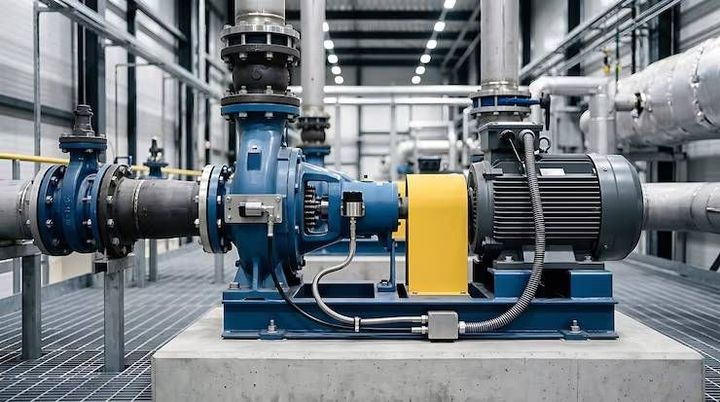
Industrial Pumps Explained: Pump Types, Manufacturing Technologies, Global Manufacturers, Suppliers and Industrial Applications
Industrial pumps are mechanical devices used to move liquids, chemicals, water, oils, slurries, and other fluids from one location to another. They operate by converting mechanical energy into hydraulic energy, creating the pressure or flow required to transport fluids through pipelines, processing equipment, and industrial systems.
The development of industrial pumps is closely connected to the growth of agriculture, water distribution, manufacturing, mining, and chemical processing. Early pumping mechanisms relied on manual operation and simple mechanical arrangements. Industrialization introduced steam-powered pumps, followed by electrically driven centrifugal pumps, positive displacement systems, and digitally controlled pumping technologies.
Today, industrial pumps are essential equipment in water treatment plants, oil and gas facilities, pharmaceutical factories, food processing units, power stations, and chemical manufacturing facilities.
Why Industrial Pumps Matter in Modern Industries
Industrial pumps support fluid transportation, circulation, pressure management, and process operations across different industries. Many manufacturing activities depend on a consistent supply of liquids and controlled fluid movement.
Industrial pumping systems help address several operational requirements, including fluid transfer over long distances, handling high-viscosity materials, chemical transportation, and wastewater management.
Major industrial applications include:
Water Treatment: Pumping raw water, treated water, and wastewater through treatment facilities.
Oil and Gas: Transporting crude oil, petroleum products, and process fluids.
Chemical Processing: Moving corrosive chemicals, solvents, and industrial liquids.
Food and Beverage: Transferring milk, beverages, edible oils, and liquid food ingredients.
Pharmaceutical Manufacturing: Handling purified water, liquid formulations, and process fluids.
Mining: Pumping slurry, mine water, and mineral processing liquids.
Power Generation: Supporting boiler feedwater, cooling water, and circulation systems.
Agriculture: Supplying irrigation water and supporting industrial agricultural operations.
The selection of pumping equipment depends on fluid properties, pressure requirements, flow rate, temperature, and operating conditions.
Major Types of Industrial Pumps
Industrial pumps are generally classified into two major categories: dynamic pumps and positive displacement pumps. Each category uses a different mechanical principle to move fluids.
Centrifugal Pumps
Centrifugal pumps use a rotating impeller to transfer energy to a liquid. The rotation increases fluid velocity, while the pump casing converts part of that velocity into pressure.
Common centrifugal pump configurations include:
End-suction centrifugal pumps.
Horizontal split-case pumps.
Vertical inline pumps.
Multistage centrifugal pumps.
Submersible centrifugal pumps.
Vertical turbine pumps.
These pumps are widely used in water supply, cooling systems, chemical processing, irrigation, and industrial circulation.
Positive Displacement Pumps
Positive displacement pumps move fluids by repeatedly trapping a fixed volume and forcing it through the discharge connection.
They are commonly used for high-viscosity fluids, controlled dosing, and applications requiring specific flow characteristics.
Major types include:
Gear Pumps: Use rotating gears to transfer oils, lubricants, and other industrial liquids.
Screw Pumps: Use rotating screws to move viscous fluids through a pumping chamber.
Diaphragm Pumps: Use a flexible diaphragm to transfer fluids and isolate the pumped liquid from mechanical drive components.
Piston Pumps: Use reciprocating pistons to move fluids under pressure.
Peristaltic Pumps: Move fluids through flexible tubing using rotating rollers or compression elements.
Submersible Pumps
Submersible pumps operate while immersed in the liquid being pumped. The motor and pumping components are designed for the relevant submerged operating conditions.
They are commonly used in wastewater management, drainage, borewell water supply, mining operations, and industrial liquid transfer.
Industrial Slurry Pumps
Slurry pumps are designed to handle mixtures containing liquids and solid particles. They are widely used in mining, mineral processing, dredging, and industrial wastewater treatment.
Their construction may include abrasion-resistant liners, specialized impellers, and heavy-duty casings.
Vacuum Pumps
Vacuum pumps remove gas molecules from an enclosed space to create reduced pressure.
Industrial applications include packaging, chemical processing, pharmaceutical manufacturing, semiconductor production, and material drying.
Industrial Pump Manufacturing Technologies and Processes
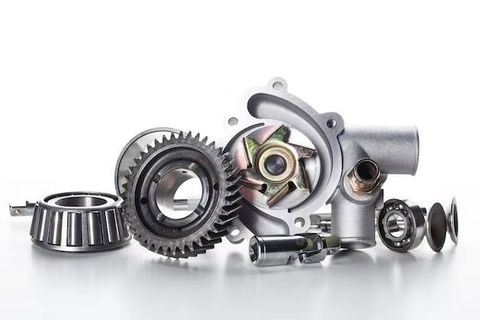
Industrial pump manufacturing involves engineering design, metal casting, precision machining, component fabrication, assembly, and performance testing.
Pump Design and Engineering
The manufacturing process begins with engineering calculations and equipment design.
Engineers evaluate:
Required flow rate.
Operating pressure and head.
Fluid viscosity and density.
Operating temperature.
Chemical compatibility.
Energy requirements.
Installation conditions.
Computer-Aided Design (CAD) software helps develop pump housings, impellers, shafts, seals, and other components.
Casting and Metal Fabrication
Pump housings and impellers may be manufactured through metal casting, forging, or machining, depending on the design and material requirements.
Common manufacturing materials include cast iron, stainless steel, carbon steel, duplex stainless steel, bronze, and selected engineering alloys.
Material selection depends on pressure, temperature, corrosion exposure, and fluid characteristics.
Precision Machining
CNC machining is used to manufacture pump components that require accurate dimensions and surface finishes.
Common machining operations include turning, milling, drilling, grinding, and balancing.
Precision manufacturing is important for shaft alignment, impeller geometry, bearing arrangements, and sealing surfaces.
Pump Assembly and Quality Testing
After manufacturing, individual components are assembled into a complete pumping unit.
Typical assembly and inspection activities include:
Impeller and shaft installation.
Bearing and mechanical seal fitting.
Motor and coupling alignment.
Casing inspection.
Leakage assessment.
Vibration measurement.
Hydraulic performance testing.
Pump performance is commonly evaluated through flow rate, head, power consumption, and efficiency measurements.
Global Industrial Pump Manufacturers and Suppliers
The global industrial pump industry includes manufacturers specializing in centrifugal pumps, positive displacement pumps, submersible systems, chemical pumps, and specialized fluid handling equipment.
Some internationally recognized manufacturers include:
Grundfos: Develops water supply, wastewater, circulation, and industrial pumping systems.
Flowserve: Manufactures industrial pumps, seals, and flow control equipment.
Xylem: Develops water transport, treatment, and pumping technologies.
KSB: Manufactures centrifugal pumps, valves, and fluid handling systems.
Sulzer: Develops pumping systems and rotating equipment for industrial applications.
Ebara: Manufactures industrial pumps, water systems, and fluid handling equipment.
Wilo: Develops pumping solutions for industrial, building, and water management applications.
Kirloskar Brothers: Manufactures industrial pumps, water supply systems, and fluid handling equipment.
Manufacturers and industrial pump suppliers offer different equipment configurations according to flow requirements, operating pressure, materials, and industry applications.
Industrial Pump Selection and Technical Evaluation Factors
Selecting an industrial pump requires an understanding of the fluid, system layout, and operating conditions.
Evaluation Factor | Description |
|---|---|
Flow Rate | Volume of fluid moved within a specified period |
Pump Head | Energy imparted to fluid, expressed as head |
Operating Pressure | Required pressure within the pumping system |
Fluid Viscosity | Resistance of the liquid to flow |
Temperature | Operating temperature of the pumped fluid |
Material Compatibility | Suitability of construction materials |
Pump Efficiency | Relationship between hydraulic output and input power |
NPSH | Net Positive Suction Head requirements |
Maintenance | Inspection and component replacement requirements |
Motor Power | Electrical or mechanical power required |
Engineers also consider pipeline diameter, friction losses, suction conditions, control systems, and the possibility of cavitation.
Industrial Pump Technologies and Industry Developments, 2024–2026
Industrial pumping technology continues to develop through improvements in automation, energy management, materials engineering, and digital monitoring.
Important developments include:
Variable Frequency Drives: VFD technology allows pump motor speed to be adjusted according to changing system requirements.
Smart Pump Monitoring: Sensors monitor vibration, temperature, pressure, and operating conditions to support equipment maintenance.
Artificial Intelligence: AI-based analytical systems are being explored for predictive maintenance, fault identification, and pump performance monitoring.
Energy-Efficient Pump Design: Manufacturers are developing improved impeller designs, hydraulic components, and motor systems to reduce unnecessary energy consumption.
Corrosion-Resistant Materials: Specialized alloys, coatings, and engineered materials support pumping applications involving aggressive chemicals and corrosive fluids.
Digital Pump Management: Connected monitoring systems allow operators to observe pump performance and equipment conditions through centralized industrial platforms.
These developments are increasingly relevant to smart factories, automated water treatment facilities, and digitally monitored industrial plants.
Industrial Pump Regulations and Standards in India
Industrial pumps used in India must comply with applicable engineering, electrical, environmental, and workplace safety requirements.
The Bureau of Indian Standards (BIS) develops relevant Indian Standards for industrial equipment and engineering products. International standards from the International Organization for Standardization (ISO) and Hydraulic Institute also provide technical guidance for pump design, testing, and performance.
Depending on the application, important regulatory and technical considerations include:
Pump Performance Standards: Applicable standards for hydraulic performance and testing.
Electrical Safety: Requirements for motors, wiring, control panels, and electrical installations.
Environmental Compliance: Requirements for wastewater discharge and industrial pollution control.
Workplace Safety: Protection against rotating machinery, electrical hazards, and high-pressure systems.
Pressure Equipment: Applicable requirements for associated pipelines, vessels, and pressure-related components.
Energy Management: Energy efficiency considerations for industrial motor and pumping systems.
Industrial facilities must identify the standards and regulatory requirements applicable to their specific equipment and operations.
Industrial Pump Design and Engineering Tools
Several software platforms and technical resources support pump design, hydraulic calculations, equipment selection, and performance analysis.
Examples include:
ANSYS: Engineering simulation and computational fluid dynamics (CFD) analysis.
Autodesk Inventor: Mechanical design and 3D equipment modeling.
SOLIDWORKS: Pump component design and mechanical engineering.
AFT Fathom: Liquid pipeline and hydraulic system modeling.
Hydraulic Institute Resources: Technical guidance on pump performance and engineering.
ISO Standards Database: Reference material for industrial pump and engineering standards.
These resources support equipment development, fluid system planning, engineering calculations, and maintenance activities.
Frequently Asked Questions About Industrial Pumps
1. What are the main types of industrial pumps?
Major types include centrifugal pumps, gear pumps, screw pumps, diaphragm pumps, piston pumps, submersible pumps, slurry pumps, and vacuum pumps.
2. What are industrial centrifugal pumps used for?
Industrial centrifugal pumps are commonly used for water circulation, chemical transfer, cooling systems, irrigation, wastewater treatment, and industrial fluid transportation.
3. How are industrial pumps manufactured?
Industrial pump manufacturing generally involves engineering design, metal casting, fabrication, precision machining, component assembly, motor integration, and hydraulic performance testing.
4. Who are the major global industrial pump manufacturers?
International manufacturers include Grundfos, Flowserve, Xylem, KSB, Sulzer, Ebara, Wilo, and Kirloskar Brothers.
5. What factors should be considered when selecting industrial pumps?
Important factors include flow rate, pump head, operating pressure, fluid viscosity, temperature, material compatibility, energy efficiency, suction conditions, and maintenance requirements.
Conclusion
Industrial pumps are essential mechanical systems used to transport and circulate liquids across manufacturing, mining, water treatment, chemical processing, and other industries. Centrifugal, positive displacement, submersible, slurry, and vacuum pumps serve different fluid handling requirements. Manufacturing technologies, precision machining, advanced materials, and performance testing influence pump design and operation. Automation, variable frequency drives, and digital monitoring continue to shape modern industrial pumping systems.