Construction Materials Explained: Building Material Types, Properties, Manufacturing Processes, Global Manufacturers, Suppliers, Supply Chains and Commercial Construction Applications
Construction materials are essential products used in residential buildings, commercial properties, industrial facilities, transportation infrastructure, and large engineering projects. They include cement, concrete, steel, bricks, aggregates, glass, timber, ceramics, insulation products, roofing materials, and specialized construction chemicals. Each material has different physical properties, structural characteristics, manufacturing requirements, and applications that influence building performance and construction methods.
The construction materials industry connects raw material extraction, industrial processing, manufacturing, distribution, and project procurement. Manufacturers convert natural resources and processed substances into standardized building products, while wholesalers, distributors, suppliers, and construction contractors coordinate their movement to project locations. Technological developments have also introduced engineered materials, prefabricated components, recycled construction products, and specialized building systems.
Understanding construction material types, technical properties, manufacturing processes, global manufacturers, commercial suppliers, and distribution networks helps explain how modern buildings and infrastructure are developed. This guide examines major building material categories, their production technologies, industrial applications, international manufacturers, supply chain structures, quality standards, and important considerations when evaluating construction materials for different projects.
Understanding the Construction Materials Industry
Construction materials are substances and manufactured products used to create, protect, support, and finish buildings and infrastructure. Their selection depends on structural requirements, environmental conditions, building design, durability, fire resistance, thermal performance, and applicable construction standards.
The industry includes several interconnected manufacturing sectors. Cement plants process limestone and other raw materials into cement, steel manufacturers convert iron-bearing materials into structural products, and ceramic manufacturers produce tiles, bricks, and sanitaryware using mineral-based materials.
Building material suppliers distribute these products through manufacturing warehouses, regional distributors, wholesale markets, and project-specific procurement arrangements. Large construction companies may also coordinate directly with manufacturers for bulk material requirements.
Main Types of Construction Materials
Different building materials perform different functions in construction. Some provide structural strength, while others support insulation, weather protection, finishing, and architectural design.
Cement and Concrete
Cement is a hydraulic binding material used in concrete, mortar, plaster, and other construction applications. It is manufactured primarily from limestone, clay, and other mineral ingredients through controlled processing.
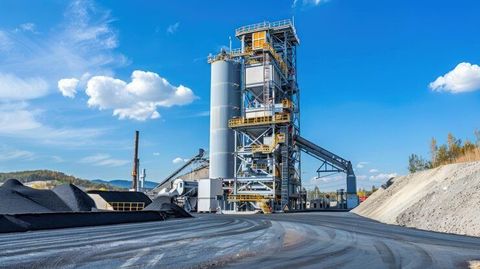
Concrete is produced by combining cement, water, fine aggregates, coarse aggregates, and, where required, chemical or mineral admixtures.
Important concrete categories include:
Ready-mix concrete: Produced at batching plants and transported to construction locations.
Precast concrete: Manufactured in controlled factory environments before transportation and installation.
Reinforced concrete: Combines concrete with steel reinforcement to improve structural performance.
High-strength concrete: Designed for applications requiring specified compressive strength.
Self-compacting concrete: Formulated to flow and fill formwork with limited mechanical vibration.
Lightweight concrete: Uses lightweight aggregates or other methods to reduce material density.
Concrete is widely used in foundations, columns, beams, slabs, bridges, industrial floors, and infrastructure projects.
Steel and Metal Building Materials
Steel is an important construction material because of its strength, structural versatility, and ability to form different profiles and sections.
Common construction steel products include reinforcement bars, structural beams, columns, steel plates, channels, angles, and hollow sections.
Steel manufacturing involves ironmaking or scrap-based steel production, refining, casting, rolling, and finishing. Fabricated steel components may undergo cutting, welding, drilling, coating, and surface treatment before installation.
Aluminium is another widely used building metal. It is commonly applied in window frames, curtain walls, roofing systems, architectural panels, and building facades.
Bricks, Blocks, and Masonry Materials
Bricks and blocks are used for walls, partitions, boundary structures, and selected load-bearing applications.
Common categories include:
Burnt clay bricks.
Fly ash bricks.
Concrete blocks.
Autoclaved aerated concrete (AAC) blocks.
Hollow concrete blocks.
Solid masonry blocks.
Interlocking construction blocks.
AAC blocks are manufactured using cementitious materials, silica-rich ingredients, and a controlled aeration process followed by autoclaving. Their relatively low density makes them useful for partition and wall construction.
Timber and Engineered Wood Products
Timber is used in roofing, flooring, doors, windows, structural framing, furniture, and decorative construction applications.
Engineered wood products include plywood, laminated veneer lumber, glue-laminated timber, and cross-laminated timber. These products are manufactured by combining wood layers or veneers using adhesives and controlled production processes.
Their applications include interior construction, structural components, prefabricated buildings, and architectural finishes.
Glass and Ceramic Building Materials
Glass is used in windows, doors, facades, partitions, skylights, and decorative architectural systems.
Important glass categories include:
Float glass.
Tempered glass.
Laminated safety glass.
Insulated glass units.
Low-emissivity glass.
Reflective architectural glass.
Ceramic materials include floor tiles, wall tiles, porcelain tiles, sanitaryware, and specialized technical ceramics. Their manufacturing generally involves raw material preparation, shaping, drying, glazing where applicable, and kiln firing.
Insulation, Waterproofing, and Construction Chemicals
Specialized building products improve thermal performance, moisture protection, adhesion, and surface durability.
Common categories include mineral wool, glass wool, expanded polystyrene, extruded polystyrene, polyurethane insulation, waterproofing membranes, sealants, adhesives, grouts, and protective coatings.
Construction chemical manufacturers also produce concrete admixtures, curing compounds, repair mortars, bonding agents, and corrosion protection products.
Comparison of Major Building Material Categories
| Material category | Important properties | Common applications |
|---|---|---|
| Cement and concrete | Compressive strength, workability, durability | Foundations, slabs, bridges |
| Steel | Tensile strength, ductility, structural capacity | Beams, columns, reinforcement |
| Bricks and blocks | Compressive strength, thermal characteristics | Walls and partitions |
| Timber | Strength-to-weight ratio, workability | Roofing, flooring, framing |
| Glass | Transparency, light transmission, insulation options | Windows and facades |
| Ceramics | Hardness, wear resistance, surface durability | Tiles and sanitaryware |
| Insulation materials | Thermal and acoustic resistance | Walls, roofs, ceilings |
| Construction chemicals | Adhesion, sealing, waterproofing | Repairs and protective systems |
Manufacturing Processes and Building Material Technologies
Construction material manufacturing involves different industrial processes depending on the raw materials and intended applications.
Cement Manufacturing Process
Cement production begins with limestone and clay extraction. These materials are crushed, proportioned, and blended before entering a rotary kiln.
The kiln operates at high temperatures to produce clinker. The clinker is subsequently cooled and ground with gypsum and other permitted constituents to produce finished cement.
Quality control involves chemical composition analysis, fineness testing, setting time measurement, and strength testing.
Steel Manufacturing Process
Steel production generally follows one of two major routes: the blast furnace-basic oxygen furnace route or the electric arc furnace route.
The first primarily uses iron ore and other inputs, while the second commonly processes steel scrap and, depending on the facility, direct reduced iron.
The molten steel is refined, cast into semi-finished products, and processed through rolling mills to produce reinforcement bars, structural sections, sheets, and plates.
Brick and Block Manufacturing
Clay bricks are produced through raw material preparation, shaping, drying, and firing in kilns.
Concrete blocks are manufactured by mixing cement, aggregates, and water before placing the mixture into molds and allowing it to cure.
AAC production uses controlled aeration and autoclaving to create lightweight blocks with a cellular internal structure.
Glass and Ceramic Manufacturing
Glass production involves melting silica-based raw materials with other ingredients in industrial furnaces. The molten material is shaped into different products and processed through suitable cooling and finishing operations.
Ceramic manufacturing includes mineral preparation, grinding, mixing, shaping, drying, firing, and finishing. Different production methods are used for tiles, sanitaryware, and specialized ceramic components.
Global Construction Materials Manufacturers and Suppliers
The international construction materials market includes multinational corporations, regional manufacturers, specialized industrial producers, and independent building material suppliers.
Recognized companies operating across different construction material categories include:
Holcim: International manufacturer of cement, aggregates, ready-mix concrete, and building solutions.
Heidelberg Materials: Global producer of cement, aggregates, and ready-mixed concrete.
CEMEX: International supplier of cement, concrete, aggregates, and related construction materials.
Saint-Gobain: Manufacturer of glass, insulation, construction products, and building systems.
CRH: International building materials group operating across construction products and infrastructure materials.
ArcelorMittal: Global steel manufacturer supplying products used in construction and industrial applications.
Tata Steel: Steel producer supplying structural and other steel products for construction and manufacturing.
Wienerberger: Manufacturer of bricks, clay blocks, roof tiles, and pipe systems.
Kingspan: Manufacturer of insulation and building envelope products.
Sika: Producer of construction chemicals, adhesives, sealants, waterproofing systems, and concrete technologies.
These companies operate in different product segments and geographical markets. Their manufacturing capabilities, product specifications, distribution networks, and technical documentation vary.
The wider supplier market includes cement distributors, steel stockists, aggregate suppliers, timber merchants, glass processors, tile wholesalers, insulation distributors, and specialized construction chemical providers.
Construction Material Supply Chains and Commercial Distribution
Construction material supply chains connect raw material producers with manufacturers, distributors, contractors, developers, and infrastructure projects.
The typical supply chain includes several stages:
Raw material sourcing: Extraction or collection of limestone, iron ore, clay, sand, aggregates, timber, and other inputs.
Industrial manufacturing: Processing raw materials into finished or semi-finished construction products.
Quality inspection: Testing materials against relevant technical specifications and production requirements.
Wholesale distribution: Moving products through regional warehouses and bulk distribution networks.
Project procurement: Construction companies and contractors arrange material quantities, delivery schedules, and technical documentation.
Transportation and site delivery: Materials are transported using trucks, railways, ships, and specialized logistics arrangements.
Commercial procurement can involve direct manufacturer agreements, distributor contracts, bulk supply arrangements, project-based purchasing, and framework agreements.
Material availability, transportation distance, storage requirements, order quantities, and delivery schedules can influence construction project planning.
Industry Trends and Developments During 2024–2026
The construction materials industry is experiencing changes driven by urban development, manufacturing technologies, environmental considerations, and demand for efficient building systems.
Important developments include:
Low-carbon cement: Manufacturers are exploring clinker reduction, alternative binders, supplementary cementitious materials, and carbon management technologies.
Recycled construction materials: Recycled aggregates, recovered steel, recycled glass, and waste-derived building products are receiving greater industrial attention.
Engineered timber: Cross-laminated timber and other engineered wood products are being incorporated into selected structural and modular building systems.
Prefabricated construction: Factory-produced wall panels, structural components, and modular building systems support more controlled manufacturing and site assembly.
Digital supply chains: Inventory management, material tracking, procurement software, and logistics coordination are becoming increasingly important.
Advanced building products: High-performance insulation, specialized glass, protective coatings, and composite materials are expanding the range of available construction technologies.
Sustainable material selection increasingly considers the entire product lifecycle, including raw material extraction, manufacturing energy, transportation, building operation, and end-of-life recovery.
Regulations, Quality Standards, and Material Certification
Construction materials must meet relevant technical and safety requirements according to their intended applications and the regulations of the country where they are used.
In India, the Bureau of Indian Standards (BIS) publishes standards covering construction products and engineering materials.
Examples include:
IS 456: Code of practice for plain and reinforced concrete.
IS 1786: Requirements for high-strength deformed steel bars and wires for concrete reinforcement.
IS 383: Specifications for coarse and fine aggregates used in concrete.
IS 269: Specification relating to ordinary Portland cement.
IS 1077: Requirements for common burnt clay building bricks.
The National Building Code of India provides broader provisions for building planning, structural safety, fire protection, building services, and construction practices.
Other international frameworks include ISO quality management standards and relevant ASTM and EN product specifications. These standards are not interchangeable in every application, so project specifications must identify the applicable requirements.
Material testing may include compressive strength, tensile strength, water absorption, dimensional accuracy, fire resistance, thermal conductivity, and chemical composition.
Important Factors When Evaluating Construction Materials
Selecting building materials requires consideration of technical performance, project requirements, supply availability, and long-term building conditions.
Structural properties: Evaluate strength, load-bearing capacity, flexibility, and compatibility with the structural design.
Durability: Consider moisture exposure, corrosion resistance, weather conditions, chemical exposure, and expected maintenance requirements.
Material compatibility: Confirm that cement, aggregates, reinforcement, coatings, adhesives, and other products are suitable for use together.
Quality documentation: Review applicable test certificates, product specifications, manufacturing information, and relevant conformity documentation.
Supplier capabilities: Examine production capacity, distribution arrangements, inventory availability, delivery schedules, and technical support.
Commercial considerations: Compare quotations, transportation expenses, bulk procurement terms, storage requirements, and lifecycle maintenance implications.
Environmental performance: Consider recycled content, manufacturing emissions, material recovery, durability, and resource efficiency.
Frequently Asked Questions
What are the main types of construction materials?
Major construction material categories include cement, concrete, steel, bricks, blocks, timber, glass, ceramics, aggregates, insulation products, and construction chemicals. Each category performs different structural, protective, or finishing functions.
Who are the major global construction materials manufacturers?
Recognized manufacturers include Holcim, Heidelberg Materials, CEMEX, Saint-Gobain, CRH, ArcelorMittal, Tata Steel, Wienerberger, Kingspan, and Sika. Their product portfolios cover different building material and industrial construction categories.
How are construction materials manufactured?
Manufacturing processes depend on the material. Cement involves kiln-based clinker production, steel involves ironmaking or scrap melting and rolling, bricks require shaping and firing, and glass involves melting and controlled forming.
What factors influence construction material selection?
Important factors include structural strength, durability, environmental exposure, fire resistance, technical standards, material compatibility, supplier availability, transportation, and maintenance requirements.
What are sustainable construction materials?
Sustainable construction materials are products designed or selected to reduce environmental impacts through resource efficiency, recycled content, lower manufacturing emissions, renewable raw materials, or improved durability. Examples include recycled steel, lower-carbon concrete, engineered timber, and recycled construction aggregates.
Conclusion
Construction materials form the foundation of residential buildings, commercial developments, industrial facilities, and infrastructure projects. Major categories include cement, concrete, steel, bricks, timber, glass, ceramics, insulation products, and construction chemicals, each with distinct properties and manufacturing requirements. Global manufacturers, regional suppliers, and distribution networks connect raw material production with commercial construction applications. Understanding material specifications, manufacturing technologies, quality standards, supply chain arrangements, and environmental considerations helps explain how building materials are evaluated and used across the construction industry.